The Attribution Paradox
Multi-touch attribution promises perfect clarity about marketing ROI. The reality is more nuanced. While MTA provides far better insights than last-click attribution, it comes with significant implementation challenges and data requirements.
Understanding these challenges upfront allows you to build realistic expectations and implement MTA in a way that delivers value without overwhelming your team or infrastructure.

MTA Implementation Challenges
The key obstacles to overcome when implementing multi-touch attribution systems.
Data Collection
Capturing every touchpoint across devices, platforms, and channels requires sophisticated tracking infrastructure.
ComplexModel Selection
Choosing the right model (linear, time-decay, position-based) depends heavily on your specific business model.
CriticalIntegration
Connecting offline conversions, CRM data, and ad spend into a single attribution engine is a major technical hurdle.
Hard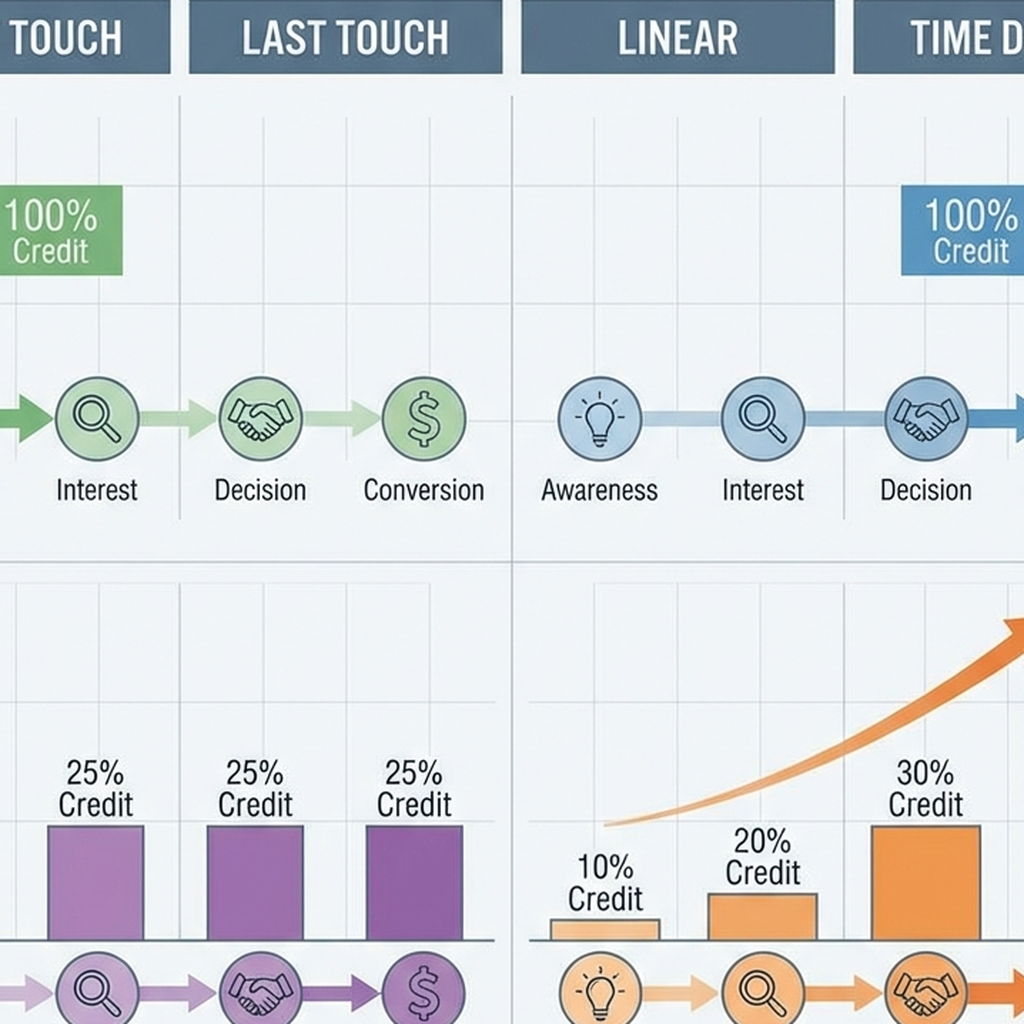
Best Practices
Start small. Don't try to implement a perfect custom algorithmic model on day one. Begin with a rule-based model like Time Decay or Position Based. Validate the data against your source of truth (e.g., your CRM revenue numbers).
Invest in data cleanliness. Garbage in, garbage out. Ensure your UTM parameters are consistent, your event tracking is accurate, and your user identification is robust.
Solve the Puzzle
Our lead architects specialize in solving complex attribution challenges for enterprise brands. Book your technical audit today.
Inquire Now